

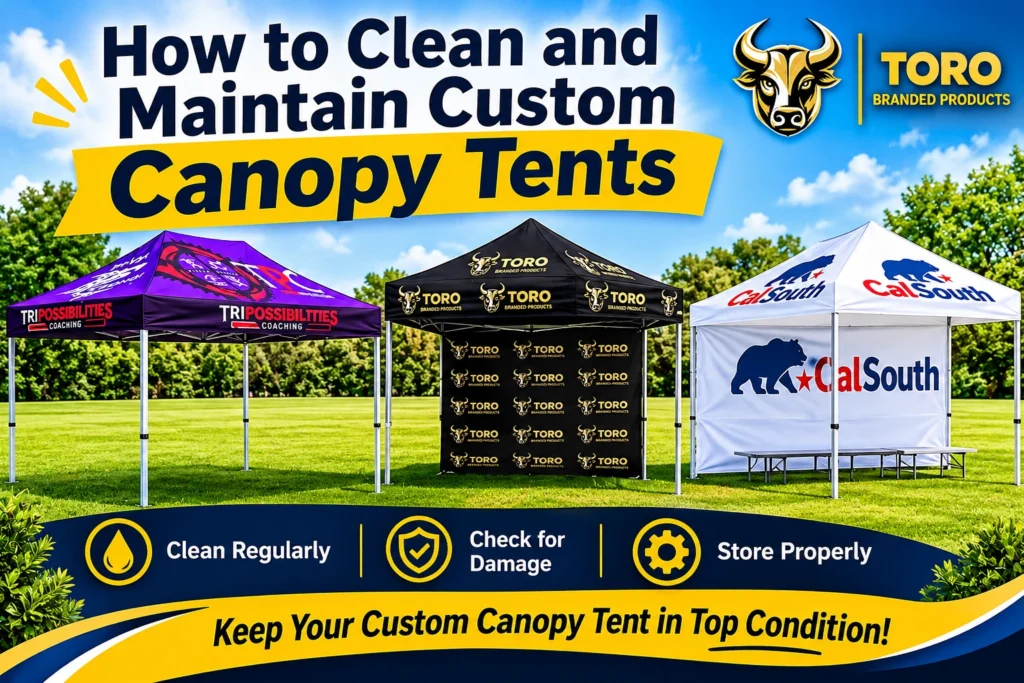
How to Clean and Maintain Custom Canopy Tents: A Complete Care Guide
To clean and maintain custom canopy tents, brush off loose dirt with a soft-bristle brush, wash the canopy fabric by hand using lukewarm water and mild dish soap, rinse thoroughly with a garden hose, and let it air-dry completely before folding. Never use bleach, harsh chemical cleaners, pressure washers, or machine dryers, as these damage protective coatings and fade printed logos. After every event, wipe down the frame with a damp cloth, inspect joints and hardware, and store everything in a cool, dry place inside a protective carry bag.
Why Proper Care Matters for Your Branded Event Canopy
Your custom canopy tent is often the very first thing potential customers, event attendees, or guests notice when they walk past your booth. Whether you set up at weekend farmers markets, outdoor food festivals, sporting events, trade shows, or outdoor weddings, your canopy acts as a mobile billboard for your brand. A crisp, vibrant, clean canopy signals professionalism and attention to detail. On the other hand, a tent covered in dust, mud splatters, tree sap, or mildew stains sends the exact opposite message.
Beyond visual appeal, regular maintenance protects your investment. Commercial-grade custom branded tents are built to handle outdoor conditions, yet dirt, ultraviolet exposure, moisture, and friction take a toll over time. Dust and grit trapped inside folding joints can scratch metal finishes or cause telescoping legs to jam. Moisture sealed inside a storage bag can lead to stubborn mildew growth and unpleasant odors that are difficult to remove later.
Furthermore, custom printed graphics require gentler handling than plain, unprinted tarps. The inks and protective finishes used to keep your logo sharp and weather-resistant can break down if exposed to abrasive scrubbing or industrial solvents. By building a simple, repeatable cleaning and storage habit after every use, you keep your branding looking bright and ensure your frame opens smoothly event after event.
Gather Your Supplies Before You Start Cleaning
Before taking your canopy down or setting it up for a wash, gather the right tools. Using gentle, everyday household supplies prevents accidental damage to both the printed fabric and the frame hardware.
What You Should Use
⦁ Soft-bristle brush or microfiber cloth: Ideal for sweeping away dry dirt, dust, pollen, and loose debris without scratching the printed surface.
⦁ Two buckets: One for your soapy cleaning solution and one for clean rinse water.
⦁ Mild liquid dish soap: A gentle, non-detergent dish soap cuts through light grease, food splatters, and surface grime without stripping water-repellent coatings.
⦁ Lukewarm or cool water: Helps loosen dirt safely without warping fabric fibers or affecting adhesive seams.
⦁ Soft sponge or non-abrasive washcloth: Great for applying soapy water and gently working on stubborn spots.
⦁ Standard garden hose with a gentle spray nozzle: Provides enough water pressure to rinse away soap suds completely without stressing seams.
⦁ Silicone-based dry lubricant spray: Useful for keeping telescoping frame legs and sliding brackets moving smoothly.
⦁ Clean, dry towels: Helpful for wiping down metal frame poles, feet, and joints after rinsing.
What You Must Never Use
⦁ Bleach or chlorine-based cleaners: Bleach permanently discolors custom printed graphics and weakens fabric threads.
⦁ Harsh degreasers, solvents, or stain removers: Chemicals like acetone, paint thinner, or heavy-duty industrial cleaners can dissolve ink and ruin protective finishes.
⦁ Pressure washers: High-pressure water jets can tear fabric, force water through stitched seams, and peel away custom graphics.
⦁ Stiff wire brushes or abrasive scouring pads: These leave permanent scuff marks on printed logos and scratch powder-coated or anodized metal frames.
⦁ Washing machines and tumble dryers: Mechanical agitation twists seams and damages coatings, while dryer heat can shrink fabric and melt synthetic components.
Step-by-Step Guide: How to Clean Custom Canopy Tents
Cleaning your tent works best on a calm, warm, overcast day-or in a shaded driveway or yard. Washing in direct, blazing midday sun can cause soap to dry onto the fabric too quickly, leaving behind faint streaks or residue.
Step 1: Set Up the Canopy Frame Partially or Fully
⦁ While you can wash a canopy top while it is detached and laid out on a clean tarp, cleaning it while attached to the frame is much easier. Set the frame up to its full footprint, or leave the legs at their lowest height setting so you can comfortably reach the peak and valance without straining. Make sure the area underneath is free of sharp rocks, oil stains, or wet mud.
Step 2: Brush Away Loose Dry Debris
⦁ Never apply water to a canopy covered in thick dust, sand, or dry leaves, because adding water immediately turns dry dirt into mud. Instead, take a soft-bristle broom, handheld brush, or dry microfiber cloth and gently sweep the entire exterior roof, valance, and interior ceiling. Pay extra attention to the corners, seams, and peak pocket where windblown dust tends to settle.
Step 3: Mix a Gentle Cleaning Solution
Fill one bucket with cool or lukewarm water and add a small squirt of mild dish soap. Stir the water gently with your hand until light suds form. Avoid adding excessive soap-too much detergent requires heavy rinsing and can leave a dull film on your custom graphics if any residue remains behind.
Step 4: Wash the Canopy Top Section by Section
Dip a soft sponge or microfiber cloth into the soapy water and wring it out slightly so it is wet but not dripping uncontrollably. Start at the top peak and work your way downward toward the valance edges in small, manageable sections. Use gentle, circular motions rather than hard scrubbing. Because you are working from the top down, dirty runoff flows over areas you have not cleaned yet rather than streaking sections you already finished.
Step 5: Treat Stubborn Spots Carefully
Outdoor events-especially food festivals and busy markets-often leave behind tougher marks like food grease, beverage splashes, tree sap, or bird droppings. For these areas:
1. Soak a clean cloth in your mild soapy water and lay it directly over the stain for 10 to 15 minutes to soften the buildup.
2. Gently dab and rub the spot with a soft sponge using light pressure.
3. For sticky tree sap, avoid scraping with sharp tools; instead, gently blot with a soft cloth dampened with warm soapy water until the residue lifts.
4. Repeat patiently if needed rather than applying stronger chemicals.
Step 6: Rinse Thoroughly with Clean Water
Once the entire canopy fabric has been washed, use a standard garden hose on a gentle shower or fan setting to rinse away every trace of soap. Start at the peak again and work downward until the runoff water runs completely clear with zero bubbles. Leftover soap residue can attract dust at your next event and may slowly dull the vibrancy of your printed colors.
Step 7: Air-Dry Completely Before Folding
This is the single most important step in canopy maintenance. Leave the canopy open on the frame in a breezy, shaded spot-or gentle morning sun-until both the outside and inside surfaces are 100% dry to the touch. Check tucked-away areas carefully, including:
⦁ Reinforced corner pockets
⦁ Hook-and-loop (Velcro) fastener strips
⦁ Seam bindings and stitching lines
⦁ The center peak cap
Even slight dampness trapped inside folded fabric can trigger mildew growth within a few days.
How to Clean and Maintain the Canopy Frame and Hardware
A sparkling clean canopy top will not do you much good if the frame underneath is stiff, dirty, or bent. Taking ten extra minutes to care for the frame keeps setup and teardown effortless.
Wiping Down Legs, Trusses, and Joints
While the canopy top is drying-or after you remove the fabric-wipe down all metal legs, cross-truss bars, and plastic or metal connector brackets using a damp microfiber cloth. Removing dust, grass clippings, and sticky beverage spills prevents grime from working its way inside the telescoping leg tubes. Follow up immediately with a dry towel so no moisture sits around bolts, nuts, or spring pins.
Inspecting Bolts, Pins, and Brackets
Outdoor wind gusts and repeated transport can gradually loosen hardware. Make a quick visual and hands-on inspection part of your routine:
⦁ Check all nuts and bolts along the scissor trusses to ensure they are snug (without over-tightening, which can restrict folding movement).
⦁ Test every pull-pin, push-button slider, and height-adjustment lock to confirm they click cleanly into place.
⦁ Look over the footpads at the base of each leg for cracks or trapped dirt.
Lubricating Moving Parts Safely
If telescoping legs or sliding brackets begin to feel sticky, apply a light mist of silicone-based dry lubricant to the sliding surfaces and wipe away any excess with a clean cloth. Avoid using heavy grease or oil-based lubricants, because wet oils attract dust and dirt like a magnet, creating a gritty paste that actually makes sliding parts jam worse over time. Keep lubricant away from the canopy fabric to avoid staining.
Preventing Common Canopy Damage During Events
The easiest stains and tears to fix are the ones that never happen in the first place. A few smart habits during setup, event hours, and teardown drastically reduce wear and tear.
Proper Setup and Teardown Habits
⦁ Never drag the frame or fabric across concrete or asphalt: Always lift the frame when repositioning it, and lay down a clean tarp or drop cloth if you need to remove or fold the canopy top on rough ground.
⦁ Open and close with a partner: Having two people walk the frame open or closed from opposite sides prevents uneven twisting on the truss bars and avoids pinching the fabric between scissor joints.
⦁ Check clearance before raising: Look up for low-hanging tree branches, overhead wires, or rough structural beams that could snag or scrape the roof peak.
Securing Your Tent Against Wind
Sudden gusts are one of the leading causes of frame damage. Always secure your canopy properly at every outdoor event-even on calm mornings-using canopy weights, sandbags, or ground stakes appropriate for your surface. If severe wind or storms roll in, lower the canopy height or take the tent down completely rather than risking bent trusses or torn fabric.
Managing Heat and Cooking Smoke Near Food Tents
If you operate a food booth, keep grills, fryers, and open-flame equipment positioned safely so rising smoke, grease vapor, and high heat do not concentrate directly under the canopy peak. Good airflow around your booth helps minimize grease buildup and smoke odors on the interior ceiling.
Smart Storage Tips Between Events
How you store your custom canopy tent between events determines how well it holds up over months and years of use.
Folding Without Creasing Printed Graphics
When your canopy is completely dry, fold it neatly rather than stuffing it loosely into a bag. Smooth out the fabric as you fold along natural seam lines so your printed logo is not crushed under heavy, sharp creases. If you remove the canopy top from the frame for long-term storage, fold it flat and store it separately from heavy metal hardware.
Choosing the Right Storage Environment
Store your packed canopy in a clean, indoor, climate-moderate space such as a garage shelf, storage closet, or warehouse rack. Avoid leaving your tent in:
⦁ Damp basements or outdoor sheds exposed to humidity
⦁ Hot vehicle trunks for weeks at a time
⦁ Direct contact with concrete floors where moisture can seep upward
⦁ Areas near sharp tools, chemicals, or pests
Complete Your Event Setup with Toro Tents
Keeping your canopy clean ensures your main shelter always looks sharp, and pairing it with matching, well-maintained display gear makes your entire booth look cohesive. Based in Upland, CA, Toro Tents (Toro Branded Products) supplies a full lineup of event and branding essentials-including custom pop up tents, custom branded tents, food tents, wedding tent decoration, advertising flags, table covers, and umbrellas-shipped across the entire USA. Whether you need a single item for a local event or a bulk wholesale order for an upcoming multi-city campaign, you can browse product images and options directly on torotents.com.
Frequently Asked Questions (FAQs):
Q1. Can I put my custom canopy tent top in a washing machine?
Ans: No. Machine washing agitates the fabric aggressively, which can weaken stitched seams, damage water-resistant coatings, and crack or fade custom printed graphics. Always wash your canopy by hand with a soft sponge, mild dish soap, and cool or lukewarm water.
Q2. What is the safest soap to use on custom printed canopy fabric?
Ans: Plain, mild liquid dish soap mixed with cool or lukewarm water is the safest choice. Avoid bleach, harsh chemical degreasers, laundry detergents with brighteners, or abrasive cleaners, as they can strip protective finishes and discolor your printed logo.
Q3. How do I remove mildew or musty smells from a canopy tent?
Ans: First, brush off loose spores outdoors with a soft brush so they do not spread. Wash the affected area gently with lukewarm water and mild dish soap, rinse thoroughly, and let the canopy air-dry completely in fresh air. The best prevention is making sure your tent is never stored while damp.
Q4. Can I leave the canopy top attached to the frame when folding it for storage?
Ans: Yes, for short-term storage between regular weekend events, leaving the dry canopy top attached to the frame saves setup time-just make sure no fabric gets pinched in the scissor trusses when closing. For extended off-season storage, removing, folding, and storing the fabric separately helps prevent unnecessary wear.
Q5. How do I stop the telescoping legs on my canopy frame from sticking?
Ans: Wipe the telescoping legs clean with a damp cloth to remove trapped dirt and dust, dry them thoroughly, and apply a light coat of silicone-based dry lubricant. Never use wet oil or heavy grease, which attracts dust and worsens sticking.
Ready to Upgrade Your Event Branding?
Visit torotents.com, pick the product you like, and start your enquiry (retail or bulk).
⦁ Company: Toro Tents (Toro Branded Products)
⦁ Address: 2315 W. Foothill Blvd. Suite 1, Upland, CA 91786
⦁ Phone: 888-658-0887
⦁ Email: Support@torotents.com
Keep Your Custom Canopy Looking Event-Ready
Taking a few simple steps to clean and maintain your custom canopy tent protects both your brand image and your hardware investment. Gentle hand-washing with mild soap, thorough rinsing, complete air-drying, and basic frame care will keep your printed graphics sharp and your setup smooth for countless events to come.
Whether you need a single custom canopy for a local event or a bulk wholesale order for your business, our team is ready to help. Visit torotents.com, pick the product you like, and start your enquiry (retail or bulk)-or reach out directly at 888-658-0887 or Support@torotents.com.